





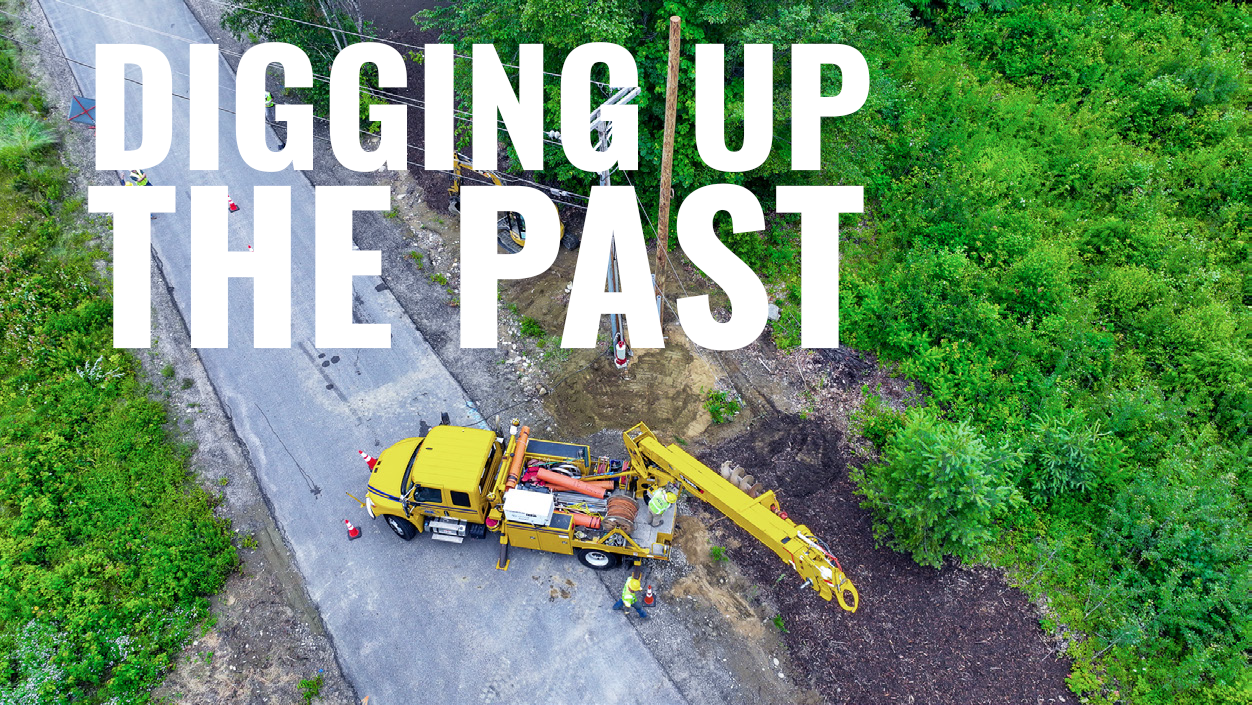
In the 1960s, many electric utilities jumped on board with what they saw as a new system of delivering electrical service more reliably: burying wires directly in a trench several feet underground. Over time, these unprotected wires began to deteriorate, which is why the Co-op is in the midst of a major project to replace and better protect those lines all in an effort to improve reliability for members.
At the time, utilities thought this was a way of reducing the number of broken poles and, theoretically, this would help with reliability and require less maintenance.
Known as “direct buried” service lines, the Granite State has shown us how unforgiving it can be. New Hampshire’s mineral-rich soil combined with the annual ground freezing and thawing caused these service lines to degrade over time.
We’re not called the Granite State for nothing. New Hampshire’s rocky ground makes burying wires quite challenging. But doing it the right way this time is important for ensuring reliability.
Prioritizing projects based on outage events and reliability issues for members, the Co-op began gathering and analyzing data in 2017 and designed long-term plans to learn from this system and remedy the issues. Estimated to take some 15 years to accomplish throughout our districts, the project aims to replace three miles of direct buried lines each year and rebury the new lines in conduits to protect and prolong their service without interruption.
“The direct buried wires are unprotected and the neutral wire – typically the copper wire – is exposed to dirt and soil and it deteriorates over time,” said Line Design Technician Darrell Dunn who is part of the direct buried underground team. His job is to go out and document the existing conditions of the direct buried lines.
“We see what’s existing and what needs to be changed and then we go back to the maps and start designing it based on what we see in the field and what we’re trying to accomplish,” Darrell said.
It’s almost akin to opening up old walls in a house: You’re never quite sure what you will find. Sometimes there are trees growing where none had been decades ago; sometimes, tennis courts. Sometimes, a degraded service line, which had not been previously mapped out gets revealed as a nearby dig is happening.
“Projects,” said Darrell, “need to remain fluid.”
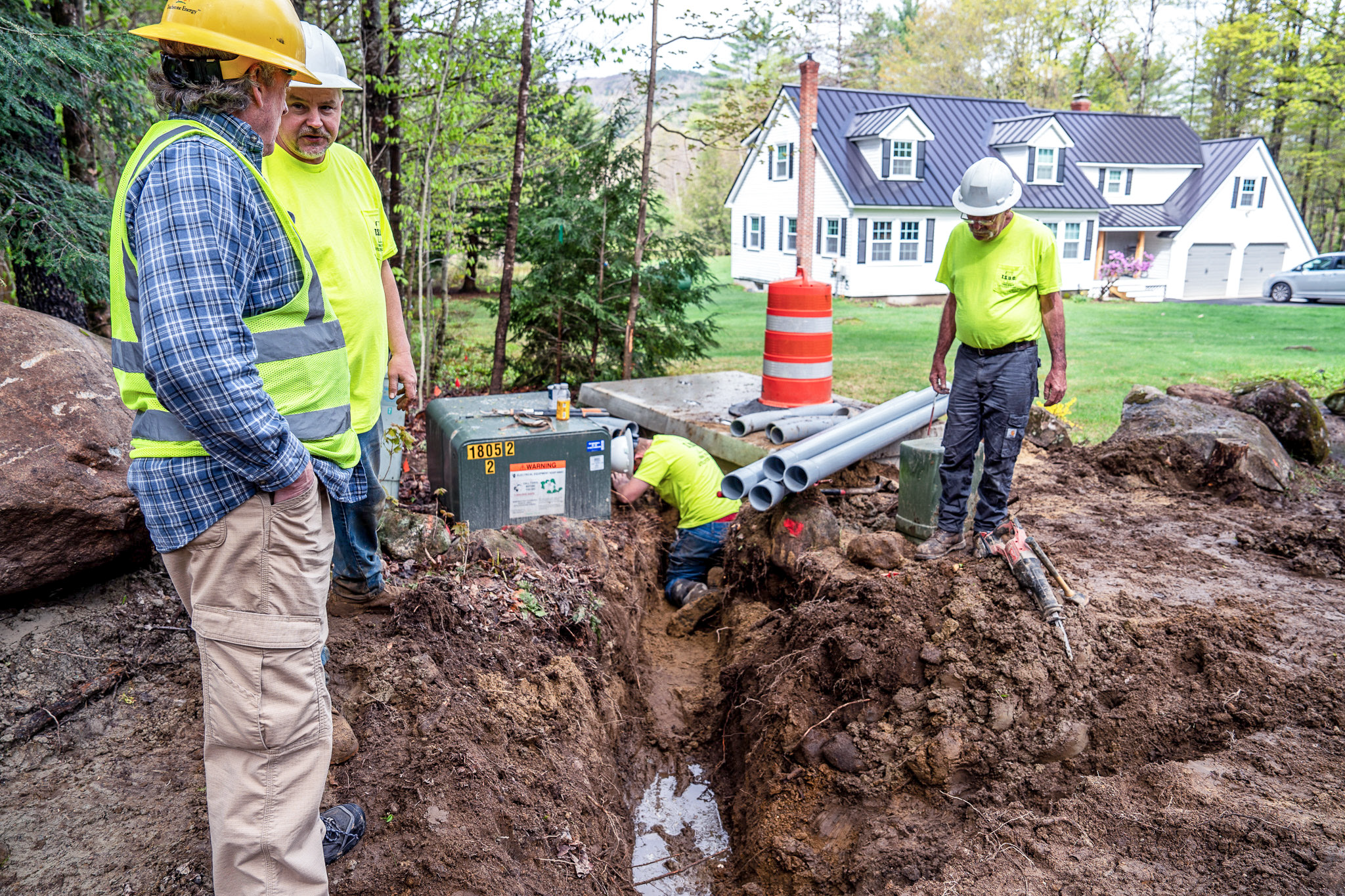
Known as the “Direct Buried Underground Project,” the first of the Co-op digs began in early 2019, seeking to replace the old wires by running new wires within a conduit. The conduit runs within an enclosed underground concrete vault, an additional means of protecting the cables. When the trench is filled, concrete slabs cover the vaulted area and on top sits the transformer, which ensures safer usable levels of voltage flowing into members’ homes.
“This process eliminates a lot of the decay that has and would have occurred inevitably in the existing wires that were directly buried,” Darrell said.
Time, the elements and the site logistics all contribute if there is a loss of power and the circuit breaks, Darrell said. Additionally, the difficulty becomes figuring out where the break or breaks occurred, depending on how many hundreds of feet the wire had been run.
At the end of the day, the mission remains — providng safe and reliable service to members.
“We’re doing something for the members that is also for the company and that is going to be useful long-term. The wires will probably be here a lot longer than I will,” he laughed.
PULL BOX:
To date, since the Direct Buried Underground Project began in 2019:
- 20.98 miles or 110,801 feet of underground trench have been dug
- 43.63 miles or 230,377 feet of underground cable have been run
- 257 concrete vaults have been installed