What’s a Peak?
The amount of electricity that members of NHEC collectively use varies during the course of the year and even from hour to hour in a given day. But there are certain times when electricity usage spikes as all members use more power at the same time. These high usage periods are called “peaks.” To control costs, NHEC calls Peak Events and asks members to manage their energy usage. If we can all collectively manage our energy usage during these Peak Events, we can have an impact on future rates.

Ways to Reduce Energy Use
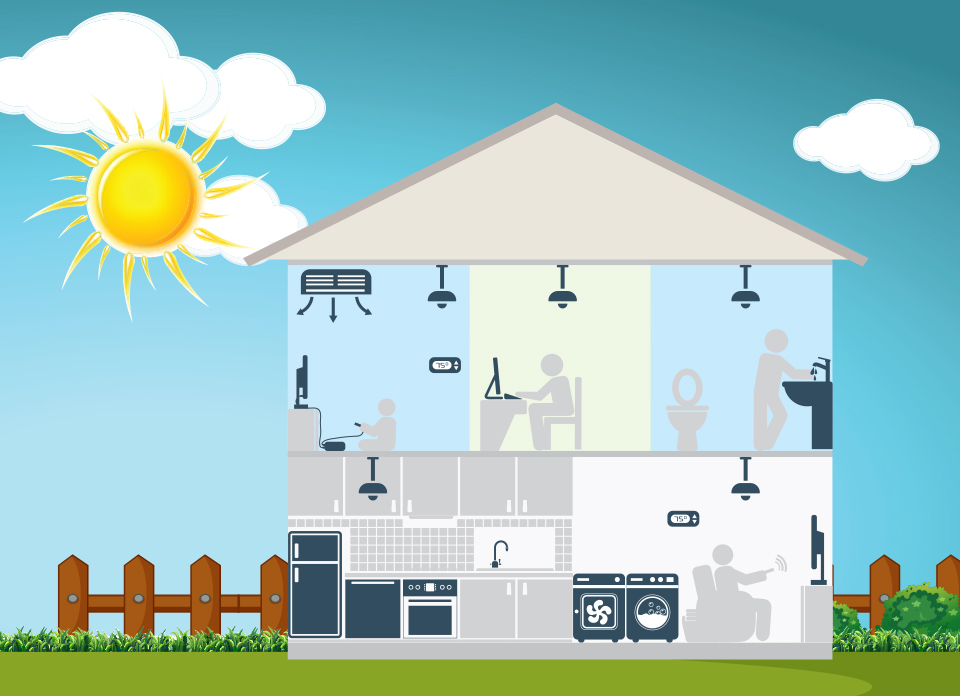
When demand is projected to be unusually high, NHEC will ask you to voluntarily reduce your electric use for a few hours. When NHEC calls a Critical Peak Event, here’s how you can manage the Peak in your house:
- Keep Your Home Cool Efficiently
- Adjust your air conditioning setpoint to 78°F.
- Close blinds and shades to block sunlight and reduce indoor heat.
- Avoid using the oven during event hours. Consider grilling outside instead.
- Shift Household Chores
- Set your dishwasher to run early in the morning or later at night.
- Do laundry before or after the event.
- Avoid using electric dryers during event hours when possible.
- Charge Electric Vehicles Later
- Delay EV charging until after the event ends.
- Schedule vehicle charging overnight.
- Use Battery Storage Wisely
- Use stored battery power during the event.
- Recharge batteries during off-peak hours.
- Reduce Lighting Load
- Dim non-essential lighting.
- Turn off decorative, outdoor, and unused lights.
Join NHEC’s Peak Days Program – It’s Free and Voluntary!
Here’s how it works:
 You’ll get a notification from NHEC before a Peak Event.Events happen between Noon and 8 PM, Monday–Friday, from June 1 to September 30 (excluding weekends and holidays).There will be no more than 15 events per year.